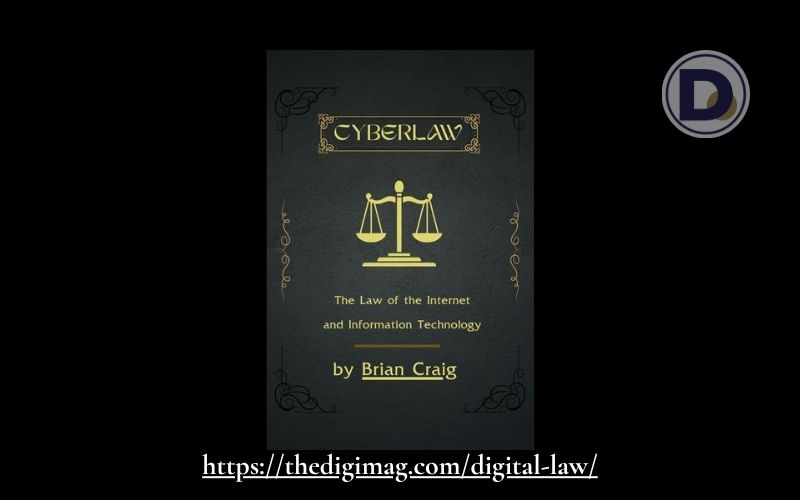
Cyberlaw by Brian Craig is an authoritative resource book for those who want a structured, broad, and practical understanding of cyber-legal issues.
Disclosure: As an Amazon Associate, I earn from qualifying purchases.
Disclaimer: Covers displayed on this page are independently designed for visual presentation and may not match the officially published artwork.
Table of Contents
ToggleAbout the Author
Brian Craig is a legal expert. He is recognized for his extensive work in cyber law, digital regulation, and the intersection of law. His writing style is distinctive, which enables readers to understand how traditional legal principles are applied in modern digital environments.
Focus
In Cyberlaw, you will find a detailed examination of the legal and policy challenges created by the contemporary world of the Internet. It explores:
- Jurisdiction and how courts handle disputes across borders
- Copyright and trademark issues
- E-commerce contracts, digital transactions, and consumer protections
- Computer crimes, hacking, and cybersecurity laws
- Online defamation, harmful speech, and reputation management
- Data protection, user privacy, and emerging regulatory frameworks
It endeavours to explain not only what the law says, but how it operates in real digital conflicts.
Best For:
- Law students studying cyberlaw, media law, IT law, or digital policy
- Legal professionals who need a reliable reference for internet-related cases
- Tech and digital business practitioners handling online platforms, user data, or e-commerce issues
- Researchers and academics exploring how the internet is regulated
- Professionals who want to understand how law adapts to evolving digital technologies.
Comprehensive Review
Cyberlaw is one of the most reliable foundational textbooks for understanding how modern digital activities intersect with legal frameworks.
If you’re trying to learn internet law, online privacy, cybercrime, data protection, digital copyright, e-commerce regulations, or online free-speech issues, this book provides a structured and comprehensive starting point.
Craig explains complex legal concepts in a way that students, IT professionals, and digital entrepreneurs can easily understand. Each chapter in the book includes clear learning objectives, real case studies, and review exercises. This book is ideal for academic use, self-study, or practical reference.
Unlike many cyberlaw books that focus on one narrow topic, this one delivers a broad, classroom-friendly overview of every major legal issue surrounding the internet and information technology.
Whether you run an online business, work in tech, or study cybersecurity or digital regulation, this book helps you understand how the law shapes online interactions, digital rights, and technological responsibilities.
If you want a well-organized, authoritative, and easy-to-follow guide to the legal rules governing the internet, Cyberlaw remains one of the best introductory resources available today.
What You’ll Learn
Cyberlaw is divided into 11 chapters. Each chapter addresses a critical legal domain:
- Jurisdiction and Venue in Cyberspace: How courts determine the proper legal authority to handle online disputes that occur across state or international boundaries.
- Example:
A seller in the United States sells a product through an online store to a buyer in the United Kingdom. The unsatisfied buyer files a complaint. Here, the court must first decide which country’s laws apply and which court has the authority to hear the case.
- Example:
- Trademarks in E-Commerce: How laws apply to online branding, domain name trademarks, and global e-commerce.
- Patents & Trade Secrets: Patent protection and trade secrets in the digital era require careful handling because information can be easily copied, accessed, or stolen online.
- Online Contracts & E-Commerce – Legal rules governing online agreements, international trade, and consumer protection.
- Online Tax Issues: How to handle tax law in the internet world.
- Computer Crimes: Cyber-crime statutes, enforcement, and policy debates.
- Tort Law in Cyberspace: Legal Handling for online fraud, defamation, appropriation, and more.
- Privacy Protections: Constitutional protections for personal data.
- Online Privacy: Evolving challenges like workplace monitoring, data mining, and social media privacy.
Each chapter is built with learning objectives, review questions, and discussion exercises. Such flexibility is ideal for classroom use or self-study.
Strengths
- Comprehensive: Covers almost every major topic related to cyberlaw.
- Well-structured for Learning: Chapters with clear objectives, exercises, and review questions make it easier for individuals with little prior knowledge to understand.
- Well-Researched: This book uses relevant and real legal proceedings to help explain both policy and doctrine.
- Clear Writing: Craig’s style is consistent and avoids overuse of Legal technical language that feels confusing or hard to read. It makes this book great for students and non-lawyers.
- Updated at Time of Publication: This book was first published earlier. However, it is updated to include legal developments up to its latest edition.
Weaknesses
- Lacks Deep Specialization: The spectrum of this book is broad. However, at times, it doesn’t dive deeply into highly advanced cyberlaw topics. Advanced legal experts may find it basic.
- Academic Feel: This book gives an academic feel since it’s designed for learning; not ideal if you prefer commentary-driven books.
- Limited International Focus: This book is less strong in its coverage of international or comparative cyber laws.
Best For
- Undergraduate law students and non-law students alike.
- IT professionals who need legal literacy in internet law.
- Digital entrepreneurs who want to understand legal risk in online business.
- Policy makers or regulators looking for a structured overview of digital legal issues.