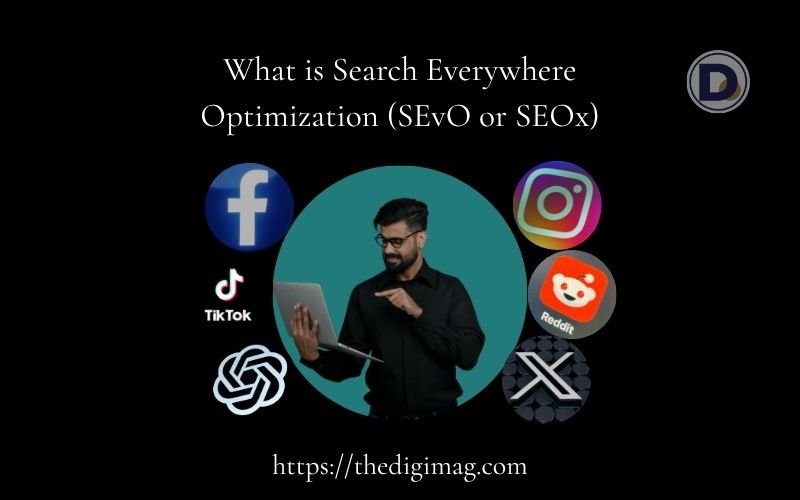
Search Everywhere Optimization (SEvO or SEOx) is the approach to making your products, content, and brand discoverable across all platforms where users search for information and make decisions.
Google Search Engine ranking is just a part of SEO. After reading the article, you will understand how beginners can build visibility and trust across Google, YouTube, Reddit, TikTok, Amazon, and AI platforms.
Disclaimer: Some of the links in this article are affiliate links. If you click on the link and purchase the item, I may earn a commission at no extra cost to you.
Table of Contents
ToggleWhat Is Search Everywhere Optimization?
Traditional SEO primarily focuses on search engines such as Google. Most businesses focus on getting their website ranked on Google, as it is an important source of traffic.
But something has changed.
People no longer discover, research, compare, and choose products or businesses only through traditional search engines. They also use platforms such as:
- YouTube
- TikTok
- Amazon
- podcasts
- social media and
- AI tools such as ChatGPT
to find information and make decisions.
Someone might discover a product in a TikTok video, look at its Amazon reviews, search Reddit for people’s experiences, watch a YouTube review, and then ask ChatGPT to compare it with alternatives.
They may make their final decision without ever visiting the company’s website. This creates a new challenge for marketers.
It is no longer enough to be visible in search results. You also need to be present where people research, evaluate, and make decisions.
This is the basic idea behind Search Everywhere Optimization (SEvO or SEOx). It is optimizing for search across multiple platforms so that people can discover a brand across the different platforms they use.
Search Everywhere Optimization takes a broader approach.
Instead of asking:
“How can I rank higher on Google?”
you also ask:
“Where does my audience go when they are looking for information, comparing options, or deciding what to buy?”
Depending on your business, the answer might include:
- YouTube
- TikTok
- Amazon
- AI assistants such as ChatGPT and Claude
- Podcasts
- Industry websites
- Review websites
- Online communities
- App stores
The objective isn’t necessarily to become active on every platform. The objective is to be visible and trustworthy on the platforms that matter most to your customers.
Why Traditional SEO Alone May Not Be Enough
Traditional SEO remains valuable. Ranking on Google can bring highly targeted visitors to your website. In the past, marketers often described the customer journey as a funnel:
Google → Website → Purchase
However, today’s customer journey can look more like a collection of small decisions.
Become aware → Research → Compare → Purchase
When people hear the word “search,” they often immediately think of Google. But people search inside many platforms.
For example:
- YouTube is used to search for tutorials and product reviews.
- Amazon is used to search for products.
- Reddit is used to search for opinions and real-world experiences.
- TikTok is increasingly used to discover products, trends, and ideas.
- Instagram is used to discover brands, products, creators, and lifestyles.
- LinkedIn is used to find professionals, companies, and expertise.
- AI assistants are used to ask questions and receive recommendations.
This means your potential customers may be looking for information about your industry without ever typing your target keyword into Google. If you only optimize for Google, you may miss some of these opportunities.
These aren’t necessarily separate steps. They can happen within minutes. The person may never search for the company’s website.
Notice something important: The company may have influenced the customer at several stages without receiving a single website visit. This is why marketers need to think beyond website traffic.
A website visitor is valuable, but being part of the customer’s decision-making process is even more important.
Different Platforms Influence People in Different Ways
One of the biggest mistakes businesses make is assuming that the same content strategy will work everywhere. It usually won’t. Each platform has its own audience, culture, format, and method of presenting information.
Understanding these differences is an important part of Search Everywhere Optimization.
Google: Discovery and Information
Google is still extremely important for discovering information.
People use it to search for:
- Answers
- Products
- Services
- Businesses
- Comparisons
- Tutorials
- Reviews
- Solutions to problems
Traditional SEO therefore remains an important part of your overall strategy.
You should still care about:
- Search intent
- Helpful content
- Technical SEO
- Internal linking
- Page experience
- Relevant keywords
- Quality backlinks
- Clear titles and descriptions
Search Everywhere Optimization does not mean abandoning Google. It means adding other important decision-making platforms to your strategy.
YouTube: Demonstration, Education and Expertise
YouTube is particularly useful when people want to see something explained or demonstrated.
For example, someone considering a software product might search for:
“Best email marketing software for beginners”
They may watch several videos before choosing one.
This makes YouTube particularly valuable for:
- Tutorials
- Product demonstrations
- Reviews
- Comparisons
- Educational content
- Expert explanations
- Case studies
A company can build trust by demonstrating that it understands the problem and knows how to solve it. For many businesses, YouTube can therefore function as both a search engine and a trust-building platform.
Reddit: Real Experiences and Unfiltered Opinions
Reddit is different. People often visit Reddit because they want opinions from other users rather than polished marketing messages.
Someone might ask:
“Has anyone actually used this software?”
or:
“Is this hosting company worth the money?”
or:
“What’s the best laptop for programming?”
These discussions can influence purchasing decisions. However, businesses need to be careful. Reddit communities can be skeptical of obvious advertising and self-promotion.
Simply entering a discussion and saying:
“Our product is the best. Buy it here!”
can damage your credibility and result in a possible ban.
A better approach is to contribute genuinely useful information and follow the rules of the particular community. The goal is not to manipulate discussions.
The goal is to earn a positive reputation by being genuinely helpful.
Amazon: Reviews and Social Proof
For businesses selling physical products, Amazon can be important. A product listing may provide detailed information about a product, but potential buyers often pay close attention to what existing customers say.
They may look at:
- Overall ratings
- Number of reviews
- Positive reviews
- Negative reviews
- Customer questions
- Photos and videos from buyers
- Recurring complaints
- Comments about product quality
This is called social proof. People often feel more comfortable purchasing something when they see evidence that other people have already purchased and used it.
Therefore, if you sell products on Amazon, your optimization strategy shouldn’t stop at keywords and product descriptions. Customer experience and genuine reviews matter too.
TikTok: Discovery and Attention
TikTok can introduce people to products, ideas, businesses, and trends they weren’t actively searching for.
Someone may not search:
“Best desk accessories”
but might watch a video showing an interesting desk setup and suddenly become interested in a particular product. This is different from traditional search. Traditional search often begins with a known problem or question.
Social platforms can create interest before the person even knows they want something.
For businesses, this makes short-form video useful for:
- Product demonstrations
- Tips
- Tutorials
- Before-and-after examples
- Interesting facts
- Reviews
- Problem-solving content
- Behind-the-scenes content
The key is to create content that fits the platform rather than simply copying a blog post into a video.
Instagram: Brand, Lifestyle and Identity
Instagram can play an important role in industries where appearance, lifestyle, creativity, or personal identity influence purchasing decisions.
People may follow:
- Brands
- Influencers
- Experts
- Creators
- Businesses
- Communities
A product can therefore become associated with a particular lifestyle. For example, someone may not simply want running shoes. They may want to become the type of person who runs regularly.
They may not simply want a camera. They may want to identify as a photographer. Successful marketing often connects products with the identity or lifestyle customers aspire to.
AI Assistants Are Becoming Part of the Decision Process
Another major change is the growing use of AI assistants.
Instead of searching Google and manually opening multiple websites, someone may ask an AI assistant:
“What are the best email marketing platforms for a small business?”
or:
“Which laptop should I buy for video editing?”
or:
“What are the best hosting companies for a beginner website?”
The AI may provide a summarized answer and recommend several options. This creates a new visibility challenge.
A business doesn’t simply want its website to rank. It wants reliable information about its brand to exist across the wider web so that AI systems have useful information to work with.
This is one reason that brand mentions, reviews, authoritative articles, expert commentary, and other trustworthy references can become increasingly important.
However, businesses should not assume that getting mentioned somewhere guarantees that ChatGPT or another AI system will recommend them.
AI systems use different sources and methods, and their behavior can change.
The practical lesson is simpler:
Build a strong, trustworthy online presence rather than trying to manipulate AI recommendations.
Visibility vs. Validation
One of the most useful ideas in Search Everywhere Optimization is the difference between visibility and validation.
Visibility
Visibility means people can find you.
For example:
- Your website appears in Google.
- Your business has a YouTube channel.
- Your product has an Amazon listing.
- Your company has an Instagram account.
Validation
Validation is stronger. It means other people, publications, communities, customers, or experts are saying positive or useful things about you.
For example:
- Customers leave genuine positive reviews.
- An industry publication mentions your company.
- A respected expert recommends your product.
- Customers discuss your product positively on Reddit.
- Other websites cite your website.
- Other creators reference your videos.
- People recommend your business without being paid to.
The difference can be summarized like this:
Visibility says, “We are here.”
Validation says, “Other people trust us.”
And trust is critical when someone is deciding whether to spend money.
Why Trust Signals Matter
Imagine that two companies appear in search results.
Company A has a polished website but almost no independent reviews.
Company B has:
- Positive customer reviews
- Helpful YouTube videos
- Mentions on industry websites
- Genuine discussions on Reddit
- Useful educational articles
- A strong social media presence
Which company would you feel more comfortable buying from? For many people, Company B would feel safer.
This is because customers don’t simply ask:
“Can I find this company?”
They also ask:
“Can I trust this company?”
Search Everywhere Optimization therefore isn’t just about producing more content. It is about building evidence of credibility across the places where people investigate your brand.
You Don't Need to Be Everywhere
At this point, you might be thinking, “Do I need to create content for Google, YouTube, Reddit, TikTok, Instagram, Amazon, LinkedIn, and every other platform?”
No. Trying to be everywhere can actually make your marketing worse.
A small business with limited time and money may be better off dominating two or three important channels than maintaining weak profiles on ten different platforms.
The goal is: Strategic presence, not maximum presence.
A Simple Framework for Choosing Platforms
For Search Everywhere Optimization, a framework called RICE is proposed for deciding which platforms deserve your attention.
The four factors are:
R — Reach
How many potential customers use the platform?
A platform with a large audience may offer more opportunities, although audience size alone doesn’t guarantee results.
I — Impact
How much could the platform affect your business?
For example, a small platform might be extremely valuable if its users are highly likely to purchase your product.
C — Confidence
How confident are you that you can succeed there?
Perhaps you are particularly good at creating videos but don’t enjoy writing long-form content.
That should influence your decision.
E — Ease
How easy is it for you to consistently create useful content for the platform?
A platform that requires expensive video production may be difficult for a small business to maintain. You can score each factor from 1 to 10 and compare the platforms.
The exact formula is less important than the principle:
Choose platforms based on business value rather than trying to use every platform available.
How to Apply Search Everywhere Optimization to a Small Website
You don’t need a large marketing team to start. In fact, a small website can begin with a very simple strategy.
Step 1: Understand How Your Customers Search
Start by asking:
Where do my potential customers go when they have a problem I can solve?
For example:
If you run a website about photography, your audience might use:
- Google for tutorials
- YouTube for demonstrations
- Reddit for equipment discussions
- Instagram for inspiration
- Amazon for equipment reviews
If you sell software, your audience might use:
- YouTube
- Review websites
- AI assistants
Don’t guess.
Look at where your competitors are being discussed and where your audience already spends time.
Step 2: Choose Two or Three Important Platforms
Don’t start with ten platforms.
Choose perhaps two or three.
For example:
Google + YouTube + Reddit
or:
Google + Instagram + TikTok
or:
Google + YouTube + LinkedIn
Your choice should depend on your audience and business model.
Step 3: Create Platform-Specific Content
Don’t simply copy and paste the same article everywhere. Instead, take one useful idea and adapt it to each platform.
Suppose your website publishes an article titled:
“How to Choose the Best Laptop for Video Editing.”
You could turn that research into:
- A detailed Google-friendly article
- A YouTube comparison video
- A short TikTok explaining three common mistakes
- An Instagram carousel showing key specifications
- A Reddit contribution answering a relevant question
- A comparison table on your website
The underlying knowledge can be the same. But the format and presentation should match the platform.
Step 4: Build Genuine Trust
Don’t focus only on publishing your own content.
Encourage genuine customers to:
- Leave honest reviews
- Share their experiences
- Ask questions
- Mention your brand
- Recommend your product when appropriate
Also look for legitimate opportunities to earn mentions from:
- Industry publications
- Bloggers
- Journalists
- Podcasters
- YouTubers
- Experts
- Relevant communities
The important word is genuine. Buying fake reviews, spamming communities, or creating artificial mentions can hurt your reputation and may violate platform policies.
Step 5: Make Your Brand Information Consistent
Your company information should be reasonably consistent across important platforms.
Make sure your:
- Business name
- Website
- Product names
- Descriptions
- Contact information
- Expertise
- Key services
are accurate and consistent. This makes it easier for customers, search engines, and AI systems to understand who you are and what you offer.
Step 6: Measure More Than Google Rankings
Traditional SEO often focuses heavily on rankings. But Search Everywhere Optimization requires a broader set of measurements.
Depending on your business, you might monitor:
- Google rankings
- Organic traffic
- YouTube views
- YouTube search traffic
- Social engagement
- Brand mentions
- Reviews
- Referral traffic
- Product-page conversions
- Leads
- Sales
- Branded searches
- Community discussions
Ultimately, the most important question is:
Are more qualified people discovering, trusting, and choosing your business?
Search Everywhere Optimization Does Not Mean SEO Is Dead
This is an important point.
You shouldn’t interpret the rise of TikTok, Reddit, YouTube, or AI as meaning that Google SEO is obsolete. SEO still matters. Google remains one of the most important ways people discover information online.
The better way to think about the change is:
SEO is becoming part of a larger visibility strategy.
Instead of:
Google → Website
think:
Google + YouTube + Reddit + Social Media + Reviews + AI + Communities → Customer Decision
The exact combination will depend on your industry.
The Bigger Opportunity for Small Businesses
Many businesses are still heavily focused on traditional SEO. That creates an opportunity for businesses willing to experiment with other channels.
For example, a competitor might spend years trying to move from position #5 to position #2 on Google.
You might still work on your Google rankings, but at the same time build:
- A YouTube channel
- A useful Reddit presence
- Genuine customer reviews
- Helpful social content
- Expert articles
- Industry relationships
You don’t have to abandon traditional SEO. You can build additional sources of visibility while your competitors remain focused on one channel.
Common Mistakes to Avoid
1. Trying to Be Everywhere
Being active on ten platforms isn’t useful if you cannot maintain any of them properly.
Start small.
2. Copying the Same Content Everywhere
A long article doesn’t automatically become a good TikTok video simply because you post a shortened version of it.
Adapt your content to the platform.
3. Constantly Promoting Yourself
People don’t join communities to be advertised to.
Provide value first.
4. Chasing Views Instead of Customers
A video with one million views isn’t necessarily better than a video with 5,000 highly relevant views.
Focus on the right audience.
5. Ignoring Reviews
Customer reviews can strongly influence purchasing decisions.
Don’t treat them as an afterthought.
6. Trying to Manipulate AI
Don’t create fake mentions simply because you think they might influence AI recommendations.
Build genuine authority instead.
7. Abandoning Google Completely
Search Everywhere Optimization expands SEO; it doesn’t require you to abandon traditional search.
A Simple Search Everywhere Strategy for Beginners
If all of this sounds complicated, start with this five-step plan.
Month 1: Strengthen Your Foundation
Make sure your website is technically sound, and your important pages are useful, clear, and optimized for relevant search intent.
Month 2: Choose One Additional Platform
Pick the platform where your customers are most likely to research or validate purchasing decisions. For example, choose YouTube if your audience benefits from demonstrations.
Month 3: Create Useful Content
Publish consistently on your chosen platform. Don’t worry about being everywhere. Become useful somewhere.
Month 4: Build Trust
Look for opportunities to earn genuine reviews, mentions, references, and recommendations.
Month 5 and Beyond: Expand Carefully
Once your first additional platform is working reasonably well, consider adding another. This approach is much more manageable than trying to build a presence everywhere simultaneously.
The New Goal: Be Part of the Decision
The biggest lesson from Search Everywhere Optimization is simple:
Getting found is only the beginning.
A potential customer may encounter your brand many times before deciding whether to trust you.
They might see you on Google.
- Watch your YouTube video.
- Read a Reddit discussion.
- Look at customer reviews.
- See your Instagram content.
- Ask an AI assistant about your company.
- Then finally purchase.
Your job is not necessarily to control every one of these interactions. Your job is to make sure that, wherever it matters, your brand has a credible, useful, and trustworthy presence.
Traditional SEO asks:
“How do I rank?”
Search Everywhere Optimization asks a broader question:
“How do I become visible and trusted wherever my customers make decisions?”
That is the mindset businesses should increasingly adopt.
Final Takeaway
The internet is no longer a single search box.
People discover information and evaluate businesses across search engines, social networks, video platforms, marketplaces, communities, review websites, and AI assistants.
That doesn’t mean you need to publish content everywhere. Instead, identify where your customers make important decisions, choose the platforms that matter most, and build genuine authority there.
Keep doing good SEO. But don’t stop there. Don’t just optimize to be found. Optimize to be trusted, recommended, and chosen.
Read More Articles on SEO
Image Source Acknowledgement: Unsplash