
Discover how simple browser games make money online – a profitable website idea for beginners.
What if a simple game that people play directly in their web browsers could become the foundation of an online business?
You do not necessarily need to develop a complicated video game, build a gaming console, or create a massive software company to explore the online gaming market. Some websites attract millions of monthly visitors by offering straightforward games that people can play for free.
These games include daily word puzzles, country-guessing challenges, and other activities that people can enjoy in just a few minutes.
The business model behind many of these websites is relatively simple: attract visitors, give them a reason to stay or return, and earn revenue by displaying advertisements.
However, building a successful gaming website requires more than copying a popular game. You need to understand what makes these websites attractive, how their business models work, and what it takes to develop something people will want to use repeatedly.
Disclaimer: Some of the links in this article are affiliate links. If you click on the link and purchase the item, I may earn a commission at no extra cost to you.
Table of Contents
ToggleWhat Is a Browser Game Website?
A browser game website allows people to play games directly through a web browser, such as Chrome or Firefox.
Unlike many traditional video games, these games do not necessarily require users to download large files or install dedicated software. Visitors can open a website, start playing, and return whenever they want.
Examples include:
- Word-guessing games in which players discover a hidden word.
- Country-guessing games that challenge players to identify a country using distance and direction clues.
- Word puzzles in which players connect letters to form as many words as possible.
- Logic puzzles that challenge players to identify patterns or solve problems.
Some games offer one new challenge every day, while others allow unlimited rounds.
The games themselves may be relatively simple, but a well-designed website can attract a substantial audience if people find the experience enjoyable.
Let Us Explore How Simple Browser Games Make Money Online
Several existing websites show how different game types can attract audiences. The following examples demonstrate the variety of opportunities in this market.
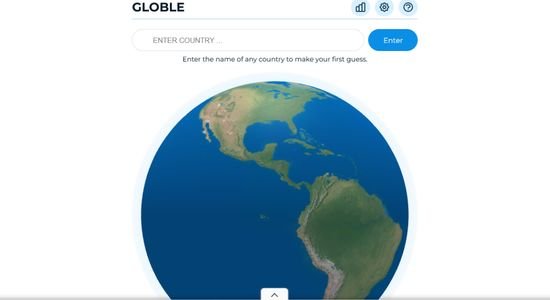
Globle is a geography-based game in which players attempt to identify a hidden country. After each guess, the game provides clues that help players determine whether they are getting closer to the correct answer.
The concept turns geography into an interactive challenge. It can appeal to students, geography enthusiasts, and people who simply enjoy testing their knowledge of the world.
Educational subjects can become entertaining games. Geography, history, science, vocabulary, and general knowledge offer opportunities to create experiences that combine learning with entertainment.
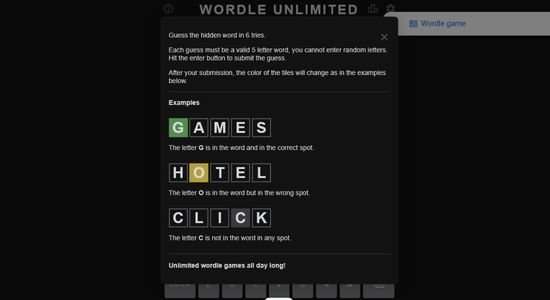
Daily word games became widely popular because they offer a short, satisfying challenge. A variation that permits multiple rounds can appeal to people who want to continue playing after completing their daily puzzle.
Wordle Unlimited is an example of this type of extended-play format.
However, using another company’s game name, branding, or protected material can create serious intellectual-property risks. A new business should develop its own identity and mechanics rather than assume that an existing game’s popularity makes it safe to imitate.
A familiar format can inspire an original product, but your website should have its own name, design, content, and distinctive features.
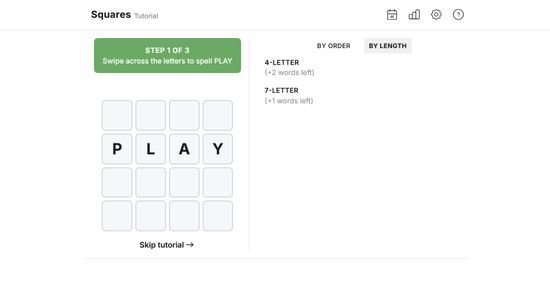
Word-formation games challenge players to connect letters and discover as many valid words as possible.
These games are easy to understand, but finding additional words can become increasingly challenging. That combination of simplicity and difficulty can encourage repeated play.
The format also offers opportunities to serve different audiences through language-specific versions or varying difficulty levels. A simple activity can become engaging when it offers clear goals, immediate feedback, and opportunities to improve.
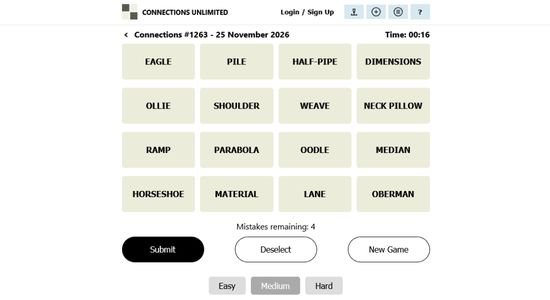
Word-grouping puzzles ask players to identify relationships between words and organize them into meaningful groups.
For example, several words might refer to colors, animals, or familiar expressions. The challenge is to recognize the hidden connection. An unlimited-play format gives users more opportunities to solve puzzles.
Many games are built around recognizing patterns. An original puzzle could use numbers, images, vocabulary, historical events, or other subjects instead of relying on someone else’s branded game.
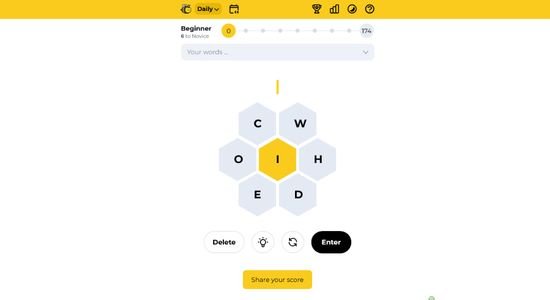
Spelling Bee games can challenge players to create as many words as possible from a selection of seven letters arranged in a honeycomb pattern.
Players must form words using at least four letters, including the central letter. Letters can be repeated, and discovering a word that uses all seven available letters (a pangram) earns bonus points.
The daily puzzles, scoring system, and achievement levels encourage players to expand their vocabulary, improve their word recognition, and return for new challenges. The website also offers an unlimited practice mode.
Daily challenges and achievement systems can encourage repeat visits. A simple game can build user loyalty by offering fresh content, measurable progress, and opportunities for improvement.

Some websites do not create games themselves but instead help players solve existing puzzles.
A spelling bee solver allows users to enter the seven letters from a puzzle, including its central letter, and discover possible words that can be formed from them.
The tool can display valid answers, organize them by word length or score, and highlight pangrams. This makes it useful for players who get stuck, want hints, or wish to check whether they have found all the possible words.
Rather than offering another game, the website focuses on solving a specific problem experienced by people who already enjoy word puzzles.
An existing popular activity can create opportunities for complementary tools. Instead of developing an entirely new game, a website can attract users by helping them overcome a particular difficulty within an activity they already enjoy.
How Do Browser Game Websites Make Money?
A free game website can generate revenue in several ways. Display advertising is one of the most straightforward models.
Display advertising
Display advertisements are promotional messages that appear on a website, often in banners, sidebars, or designated spaces between content.
An advertising network connects website owners with advertisers and helps manage the ads. Depending on the network and advertising arrangement, the website owner may earn revenue from ad impressions, clicks, or other qualifying activity.
Here is the basic process:
- A developer creates a browser game and publishes it on a website.
- People visit the website to play.
- The website displays advertisements.
- The advertising network records eligible activity.
- The website owner receives revenue according to the advertising agreement.
The game can remain free for visitors while the advertisements help cover operating expenses and generate profit.
Understanding RPM
One useful advertising metric is RPM, which means revenue per thousand page views in this example.
RPM helps estimate how much a website earns for every 1,000 page views.
The following formula provides a simplified estimate:
Estimated monthly ad revenue = Monthly page views ÷ 1,000 × Page-view RPM
For example, suppose a gaming website receives 100,000 page views in a month and earns an illustrative RPM of $4.
100,000 ÷ 1,000 × $4 = $400
The website would generate an estimated $400 in monthly advertising revenue under those assumptions.
This is a hypothetical calculation, not a promise of earnings. Actual revenue depends on the advertising network, audience location, visitor behavior, ad placement, seasonality, and other factors.
How Much Could a Popular Browser Game Website Earn?
To understand the potential scale of this business model, consider several hypothetical scenarios.
Monthly page views | Assumed RPM | Estimated monthly ad revenue |
10,000 | $2 | $20 |
100,000 | $4 | $400 |
500,000 | $4 | $2,000 |
1,000,000 | $5 | $5,000 |
2,000,000 | $5 | $10,000 |
These figures illustrate how traffic and advertising rates affect potential revenue. They are not verified earnings for any particular website.
Notice that the number of visitors is not the same as the number of page views. If one visitor views several pages or plays multiple rounds that generate additional page loads, the website may record multiple page views from that person.
Similarly, a website receiving a million visits does not automatically earn a particular amount. Its actual page views and RPM matter.
For this reason, estimates based on public traffic tools and assumed advertising rates should be treated as approximations rather than confirmed financial results.
Why Do People Return to Simple Games?
A successful browser game website needs more than a game that works. It needs a reason for people to return.
Several characteristics can help.
Simple rules: Visitors should understand what to do within seconds. Complicated instructions can discourage people from playing.
Short sessions: A game that can be completed in a few minutes fits easily into a break, a commute, or a quiet moment during the day.
Daily challenges: A new puzzle each day can establish a routine and encourage repeat visits.
Unlimited play: Some users prefer the freedom to play multiple rounds rather than wait for the next daily challenge.
Progress and achievement: Scores, streaks, personal records, and difficulty levels can motivate players to improve.
Easy access: A fast-loading, mobile-friendly website makes it easier for people to play whenever they have a few spare minutes.
Not every game needs all these features. The right approach depends on the audience and the type of experience you want to create.
How Can You Find Ideas for a Browser Game Website?
You do not necessarily have to invent an entirely new type of game. However, you should look for an opportunity to create something distinctive and useful.
Here is a practical research process.
Step 1: Explore existing games
Make a list of browser games in different categories, including word puzzles, geography, trivia, mathematics, and logic challenges.
Pay attention to which games are easy to understand, which encourage repeat play, and which appear to serve a specific audience.
Step 2: Look for underserved audiences
Instead of immediately competing with established general-purpose games, consider whether a particular group needs something different.
For example, you could explore:
- Vocabulary games for English learners.
- Geography puzzles for school students.
- Mental mathematics challenges for beginners.
- History quizzes for enthusiasts.
- Word games designed for children, with appropriate educational content.
- Logic puzzles for people who want short daily challenges.
These are ideas to investigate, not guarantees of demand.
Step 3: Identify a meaningful improvement
Ask yourself what you could offer that existing alternatives do not provide particularly well.
Possible improvements include simpler instructions, a better mobile experience, adjustable difficulty, accessibility features, language support, or educational explanations after each answer.
A small but meaningful improvement can be more valuable than adding numerous unnecessary features.
Step 4: Research demand
Before investing significant time or money, investigate whether people are already searching for related games or discussing the subject online.
Keyword research tools can help you discover search terms, estimate search demand, and identify related topics. You can also examine competing websites and look for gaps in their content or user experience.
Remember that search volume alone does not prove that a game will succeed. Some games receive most of their traffic from returning visitors, social sharing, or direct visits rather than search engines.
Step 5: Test a small version
Start with one playable game rather than attempting to create an entire gaming platform.
A basic prototype can help you determine whether the rules make sense, whether the game works on mobile devices, and whether people actually enjoy playing it.
Gather feedback, fix problems, and improve the experience before expanding.
Do You Need Coding Skills to Build a Browser Game?
Not necessarily, although the answer depends on the game you want to create.
A simple word puzzle may require considerably less development work than a multiplayer game with real-time interactions, sophisticated graphics, or complex game logic.
Potential approaches include:
No-code tools: These can help beginners build certain interactive experiences with limited programming. However, not every tool supports the mechanics, performance, or customization required for a successful game.
AI-assisted development: AI coding tools can help explain programming concepts, generate initial code, identify errors, and improve a basic game. Their output still needs to be tested and reviewed.
Traditional web development: HTML, CSS, and JavaScript are useful technologies for creating browser-based games. JavaScript handles much of the game’s interactive behavior, while HTML and CSS help structure and style the experience.
For a beginner, a small word-guessing game or a basic mathematics challenge can be a reasonable learning project.
The important point is to start with a manageable idea. Building a playable prototype is usually a better first step than trying to create a complex gaming website immediately.
How Can You Attract Visitors to Your Game Website?
Even a well-built game needs an audience. Traffic acquisition should therefore be part of your plan from the beginning.
Search engine optimization
Create a clear website structure and useful pages that explain your game, its rules, and its features.
If people search for a particular type of puzzle, relevant page titles and descriptions can help them understand what your website offers. Technical SEO, fast loading, mobile usability, and crawlable pages can also support discoverability.
However, ranking is not guaranteed. Search engines evaluate many factors, and a new website may take time to gain visibility.
Social media
Short demonstrations, interesting puzzles, and shareable challenges can introduce your game to potential players.
For example, a geography game might share a challenging daily question, while a word game could invite people to compare their results.
Make sharing convenient without forcing visitors to publish anything.
Repeat visits
A daily challenge, saved progress, or a well-designed collection of puzzles can encourage people to return directly to the website.
Repeat visitors are particularly valuable because they can reduce your dependence on constantly acquiring new users.
Referrals and word of mouth
People may recommend a game when it is enjoyable, easy to share, or suitable for friendly competition.
A simple sharing feature can help users introduce the game to friends, classmates, and colleagues.
The best traffic strategy will depend on your audience. You should measure where visitors come from and which sources bring people who actually play.
Important Risks to Consider Before Starting
The apparent simplicity of browser games can make this business model look easier than it really is. Several issues deserve attention.
Copyright and trademarks: Do not assume that you can copy an existing game’s name, branding, artwork, text, code, or distinctive assets simply because the game is accessible online.
Intellectual-property protection varies by jurisdiction and by the specific material involved. Develop an original identity and seek appropriate legal advice when necessary.
Advertising restrictions: Advertising networks have their own approval requirements and content policies. A website may not qualify immediately, and displaying more advertisements does not always improve the user experience or revenue.
Development and maintenance: Games need testing, bug fixes, security updates, and occasional improvements. Even a simple game can require ongoing work.
Competition: Popular categories often contain established websites with loyal audiences. A new website needs a reason for users to choose it.
Uncertain earnings: Traffic estimates from third-party services are not the same as verified analytics, and advertising revenue cannot be guaranteed. A website may receive substantial traffic but still generate disappointing returns.
User experience: Excessive advertisements, slow loading, intrusive pop-ups, or confusing navigation can drive visitors away. Sustainable growth requires balancing monetization with usability.
Understanding these risks before launching can help you make better decisions and avoid unnecessary expenses.
Is a Browser Game Website a Good Online Business Idea?
A browser game website can be worth exploring if you enjoy problem-solving, understand a particular audience, or want to learn how interactive websites work.
Its appeal comes from a straightforward business model: create an engaging experience, attract an audience, and monetize the resulting traffic.
However, there is a significant difference between building a game and building a successful business around it.
A working game does not guarantee visitors. Visitors do not guarantee repeat engagement. And traffic does not guarantee substantial advertising revenue.
The most sensible approach is to validate the idea before making a large investment.
Start with a small game, test it with real users, study their feedback, and improve the experience. Monitor visitor numbers, repeat visits, page views, and revenue if monetization becomes available.
Only expand when you have evidence that people want what you are building.
Concluding Remarks
Simple browser games demonstrate an important principle of online business: a product does not always need to be complicated to attract an audience.
A word puzzle, geography challenge, or classic card game can provide an enjoyable experience that people return to regularly. With sufficient traffic and a suitable monetization strategy, that audience may create an opportunity to earn revenue through advertising or other relevant business models.
But the opportunity lies in more than copying a popular idea. It lies in understanding what people enjoy, identifying an underserved audience, developing a distinctive experience, and improving the product over time.
If you are considering building your own browser game website, start small. Choose one idea, research its potential audience, build a basic version, and test whether people want to play it again.
That evidence will tell you far more about your business potential than an impressive revenue estimate ever could.
Read More:
Image Source Acknowledgement: Unsplash