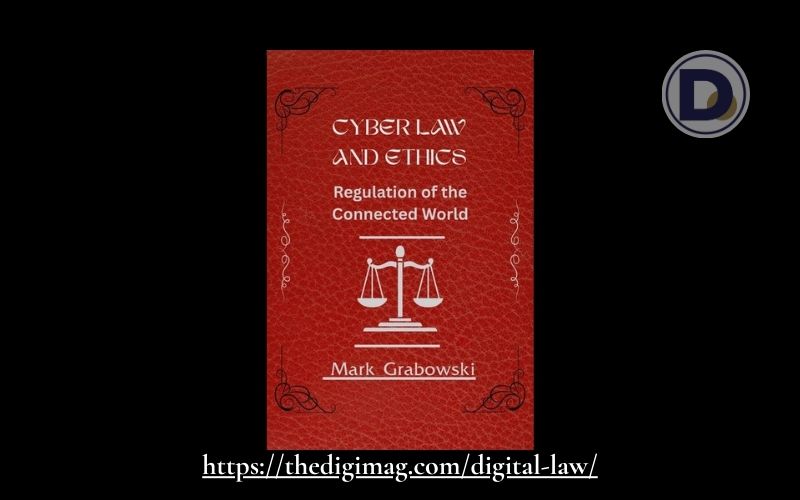
“Cyber Law and Ethics: Regulation of the Connected World” is one of the most modern introductions to the legal and ethical issues of the digital age.
Disclosure: As an Amazon Associate, I earn from qualifying purchases.
Disclaimer: Covers displayed on this page are independently designed for visual presentation and may not match the officially published artwork.
Traditional law books focus only on statutes or court rulings. “Cyber Law and Ethics” merges legal principles with ethical analysis. This book shows its readers not only what the law is, but also what the law should be in a rapidly evolving digital world.
This book makes complex topics easy to understand while still maintaining academic depth. This approach makes it an ideal foundation for students, professionals, and anyone working with online technologies.
Table of Contents
ToggleUnderstand Digital Law Through Real Issues and Ethical Dilemmas
As stated above, what makes “Cyber Law and Ethics” stand out is the way it approaches digital conflicts through both legal disputes and ethical challenges. Every chapter presents real-world scenarios that highlight tensions created by the connected world:
- online speech and media responsibility
- digital privacy and surveillance
- data protection
- cybercrimes and cybersecurity
- platform liability
- misinformation and defamation
- copyright and digital ownership
- content moderation
- AI (Artificial Intelligence), automation, and digital ethics
- consumer rights in online environments
The authors of this book avoid overwhelming readers with pure doctrine; rather, they use examples, case studies, and ethical questions to bring digital law to life.
Complex Technology Made Clear and Logical
The writing style of “Cyber Law and Ethics” is one of the book’s strongest features. Grabowski and Robinson break down complex digital problems into simple, logical explanations. Their commentary highlights:
- Why a particular issue matters
- Which legal principles are involved
- How courts interpret digital actions
- What ethical responsibilities do companies and users carry
- How technology changes the meaning of old laws
The authors’ clarity builds a solid connection between modern technology and legal doctrine. Many other law books fall short in delivering the necessary clarity.
Covers the Full Scope of Cyber Law and Digital Ethics
Cyber Law and Ethics’s comprehensive coverage makes it a single, reliable source for understanding how the digital world is regulated. It includes discussions on:
- cybersecurity risks and responsibilities
- privacy laws and ethical data use
- defamation and online speech
- content moderation and platform governance
- intellectual property in digital spaces
- digital contracts and online agreements
- global jurisdiction and cross-border disputes
- cyberbullying, harassment, and digital harm
- ethical responsibilities of tech companies
- regulation of new technologies such as AI and IOT
This broad scope helps readers understand how different areas of law interact and how ethical considerations influence legal reforms.
Ideal Resource for Students and Professionals Alike
“Cyber Law and Ethics” offers a well-structured layout, real-world examples, and thought-provoking ethical questions. Students can greatly benefit from it.
Professionals, including cybersecurity experts, tech entrepreneurs, digital marketers, IT managers, and policy analysts, appreciate its practical clarity and updated insights.
If you work in the digital world and want to understand:
- How online speech is regulated
- How companies must protect user data
- What ethical obligations do tech platforms carry
- How Courts Handle Digital Disputes
- What rights users have online
This book provides a reliable and easy-to-understand guide.
Teaches You to Think Critically About Digital Law
Another key strength of this book is how it transforms legal rules into critical thinking exercises. Readers learn to analyze:
- What should happen in a particular digital dispute?
- Which legal rules apply when technologies evolve?
- How should platforms ensure harm prevention and free speech?
- What ethical responsibilities accompany digital innovation?
- How do privacy, safety, and freedom interact online?
The blend of legal reasoning and ethical reflection makes the book far more insightful than a simple textbook.
Concluding Remarks
“Cyber Law and Ethics: Regulation of the Connected World” is a modern, engaging, and comprehensive guide for understanding how the digital world is governed.
It’s a combination of real cases, ethical questions, and practical examples. Clear explanations make it one of the best resources available for anyone interested in:
- cyber law
- online regulation
- digital rights
- platform accountability
- privacy and cybersecurity
- technology policy
This book not only teaches legal theory but also demonstrates how legal and ethical principles are applied in real-world digital environments. It is an essential read for students, educators, tech professionals, and anyone trying to navigate the complex challenges of the connected world.